

Why AI Data Centers Are Creating a Massive Demand for Remote Hands Services
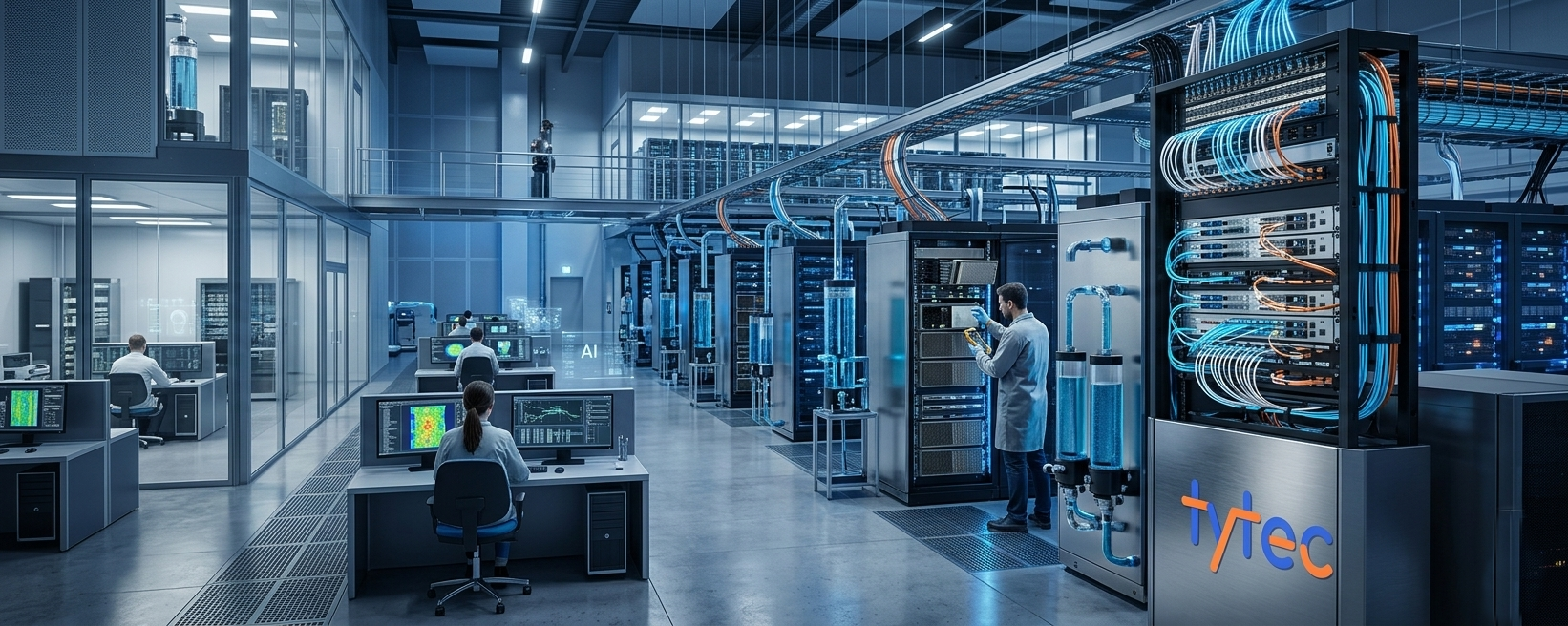
Artificial intelligence is transforming the global data center industry at a breakneck pace. Across Sweden and the wider Nordic region, organizations are deploying increasingly powerful GPU clusters, AI inference platforms, and high-density computing environments to support machine learning, automation, and generative AI workloads. While much of the public conversation around AI infrastructure focuses on software innovation and computational performance, the real operational challenge is happening more and more at the physical layer. As AI infrastructure becomes more demanding, organizations are discovering that automated systems that require a lot of human input still rely heavily on skilled engineers physically working inside data centers. This is creating a massive surge in demand for professional remote hands services throughout the Nordic data center market.
AI Infrastructure Is Physically Different From Traditional Enterprise IT
Traditional enterprise infrastructure planners largely designed it around predictable workloads, moderate rack densities, and relatively stable hardware lifecycles. AI infrastructure changes all those assumptions. Modern GPU servers consume more power, generate a lot more heat, and rely on much more complex networking architectures than conventional compute environments. AI deployments frequently operate at rack densities exceeding 40 kW, with some advanced environments pushing well beyond 60 kW per rack. This creates entirely new operational pressures involving thermal management, cooling efficiency, power delivery, optical networking, and physical infrastructure stability.
Unlike standard enterprise workloads, AI systems are highly sensitive to latency, packet loss, and thermal fluctuations. A single failed transceiver, contaminated fiber connection, or overheating switch can disrupt entire GPU clusters and interrupt expensive AI training operations. At the scale that modern AI environments operate, what appear to be minor physical problems can escalate into major operational incidents. While software monitoring systems can identify failures instantly, they can’t physically replace components, reroute cabling, inspect liquid cooling systems, or troubleshoot damaged infrastructure. That responsibility still depends on experienced on-site engineers.
The Rise of High-Density AI Data Centers in the Nordics
The Nordic region is becoming one of the most attractive locations in Europe for AI infrastructure investment. Sweden, Finland, Norway, and Denmark offer significant advantages, including renewable energy availability, strong fiber connectivity, political stability, and naturally cooler climates that improve data center cooling efficiency. International organizations increasingly view Nordic facilities as ideal locations for high-density AI infrastructure deployments and future hyperscale expansion.
However, deploying AI infrastructure into Nordic facilities introduces a major operational challenge for international organizations. Many companies manage infrastructure remotely from London, Frankfurt, Amsterdam, or the United States, while their physical infrastructure operates inside data centers thousands of kilometers away. This creates what many operators describe as the “physical gap” the growing disconnect between centralized infrastructure management and localized physical intervention requirements. Automated digital environments may exist in AI, but when hardware fails, organizations still need someone physically present to respond immediately.
As AI deployments continue accelerating across the Nordics, remote hands services are increasingly becoming a core operational requirement rather than an optional support layer.
Why Remote Hands Services Are Becoming Mission Critical
In the past, people often viewed remote hands services as straightforward operational support functions. Tasks typically involve rebooting servers, replacing failed drives, checking indicator lights, or examining equipment with the eyes. AI infrastructure is fundamentally changing those expectations.
Modern AI environments require remote hands engineers to possess advanced technical skills involving optical networking, high-density cabling systems, GPU hardware handling, thermal management, structured troubleshooting, and high-speed network validation. Engineers supporting AI infrastructure increasingly work with 400G and 800G optical environments, liquid cooling systems, advanced telemetry platforms, and mission-critical compute clusters where downtime costs can escalate rapidly.
This shift is creating a growing demand for specialized remote hands providers capable of operating as true infrastructure partners rather than basic support contractors. Organizations deploying AI workloads need technicians who understand not only how to replace hardware, but also how to diagnose physical-layer problems that directly impact AI performance and operational stability.
The Financial Impact of AI Infrastructure Downtime
AI infrastructure is expensive to operate. GPU hardware represents a substantial capital investment, and operational downtime carries serious financial consequences. Large AI training operations may involve hundreds or thousands of GPUs running continuously for extended periods. If even a small section of the environment experiences connectivity issues, cooling failures, or hardware instability, entire workloads can fail or experience significant performance degradation.
The cost of downtime in AI environments extends far beyond simple hardware replacement. Failed training jobs waste electricity, computational resources, engineering time, and project timelines. Inference environments supporting real-time AI applications may directly impact customer-facing services, manufacturing systems, analytics platforms, or automated decision-making environments. Every minute of disruption matters.
Because of this, organizations increasingly prioritize fast physical response capabilities. The ability to dispatch skilled engineers immediately to troubleshoot and resolve infrastructure issues has become a critical operational advantage for AI-focused data center environments.
Why AI Is Increasing the Need for Human Infrastructure Expertise
One of the biggest misconceptions surrounding AI infrastructure is the belief that automation will reduce the need for human operational support. In reality, the opposite is happening. AI systems make physical infrastructure operations more important than ever.
Modern AI-driven monitoring platforms can detect anomalies involving temperature fluctuations, optical degradation, power irregularities, cooling instability, and network performance long before traditional monitoring systems would identify a problem. Predictive maintenance platforms are becoming increasingly effective at forecasting hardware failures and operational risks. However, identifying a problem is different as physically resolving it.
An AI platform may determine that a transceiver is failing, a liquid cooling loop requires inspection, or a cable path is experiencing signal degradation. But software can’t physically enter a rack, replace hardware, validate optics, clean fiber connectors, or inspect infrastructure components inside a live data center environment. This creates a new operational model where AI provides intelligence, while skilled engineers provide execution.
Rather than eliminating remote hands services, AI infrastructure is dramatically increasing their importance.
The Growing Complexity of AI Networking Infrastructure
Networking complexity is another major factor driving the demand for professional remote hands services. AI clusters depend on extremely fast, low-latency communication between compute nodes. Modern AI environments increasingly utilize high-speed Ethernet, advanced optical networking, and large-scale east-west traffic architectures to maintain performance.
At these speeds, physical infrastructure quality becomes important. Fiber contamination, improper cable management, poor bend radius control, or transceiver alignment issues can create performance degradation that is difficult to diagnose remotely. High-density AI environments also introduce major thermal and airflow challenges around switches, optics, and structured cabling systems.
As organizations deploy increasingly advanced networking infrastructure across Nordic facilities, the need for skilled engineers capable of performing physical-layer diagnostics and validation continues to grow rapidly.
Why Nordic Facilities Need Local Infrastructure Partners
The Nordic region’s geography also contributes to increasing reliance on remote hands providers. Companies distribute many AI deployments across multiple facilities to improve resilience, reduce latency, and support edge computing requirements. Managing these environments from a distance without reliable local support becomes operationally difficult very quickly.
Organizations expanding into Sweden and the Nordics often underestimate the logistical complexity involved in supporting distributed infrastructure environments. Flying internal staff internationally for routine maintenance or emergency intervention is slow, expensive, and operationally inefficient. Local remote hands providers bridge that gap by providing immediate physical presence and infrastructure expertise whenever issues occur.
This is particularly important for international operators managing mission-critical infrastructure inside Nordic colocation facilities, hyperscale campuses, and regional edge deployments.
The Future of AI Infrastructure Depends on Physical Execution
The future of AI infrastructure won’t consist of autonomous data centers operated entirely through software. Instead, the next generation of infrastructure operations will combine intelligent automation with highly responsive physical engineering support.
AI systems will continue improving predictive analytics, monitoring, and infrastructure orchestration capabilities. However, the physical reality of operating high-density compute environments will always require skilled human intervention. Servers will still fail. Optics will still require validation. Cooling systems will still need inspection. Fiber infrastructure will still require testing and troubleshooting.
As AI deployments become larger, faster, and more dispersed across space, the organizations that succeed will be those capable of bridging the gap between digital intelligence and physical execution. Professional remote hands services are increasingly becoming that bridge, and across Sweden and the Nordic region, they’re rapidly evolving into one of the most critical operational components of the modern AI infrastructure industry.