

Why AI Agents Still Need Humans: The Hidden Data Center Infrastructure Bottleneck in 2026
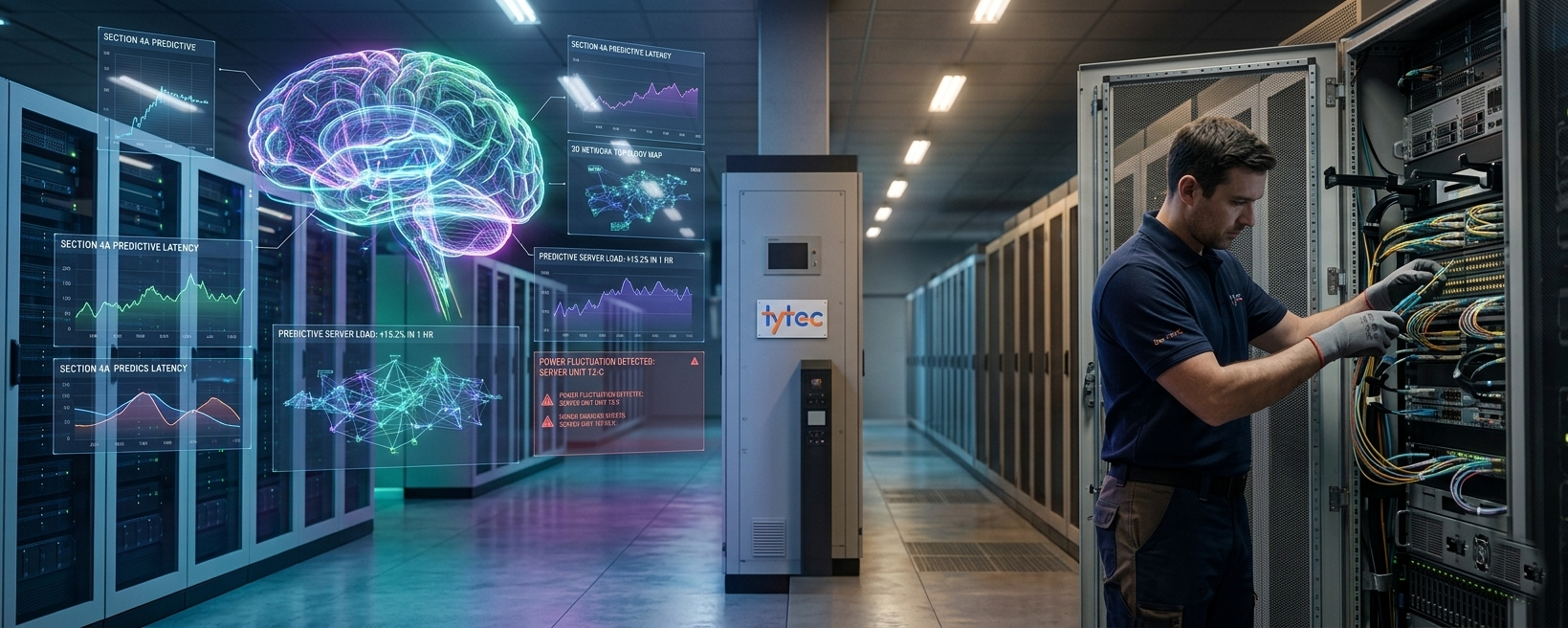
The Rise of AI Agents in Data Center Operations
The narrative surrounding AI in 2026 has become increasingly confident, almost to the point of assumption. Autonomous systems are here, AI agents are capable of operating entire workflows independently, and the future of data center infrastructure is one where human intervention becomes the exception rather than the rule. Across enterprise IT, cloud platforms, and infrastructure management, AI agents have embedded into monitoring systems, orchestration layers, and decision-making pipelines, creating the impression that modern environments are evolving toward full autonomy. Yet this perception is largely shaped by what happens inside software-defined systems, where automation can operate without friction. The moment these systems intersect with the physical realities of infrastructure, power delivery, cooling systems, cabling, and hardware deployment, the limits of autonomy become immediately clear, revealing a fundamental dependency that AI alone can’t eliminate.
Why Autonomous Data Centers Are Still a Myth
The concept of the self-governing data center is compelling because it aligns with the broader trajectory of digital transformation: systems that observe, analyze, and act without human input. AI agents operate on this principle, continuously processing telemetry data, identifying anomalies, and recommending or executing responses in real time. However, this model assumes that all actions can be executed digitally, which isn’t the case in infrastructure environments. When a server overheats due to airflow obstruction, when a fiber link fails due to a physical break, or when a power distribution unit malfunctions, the resolution requires direct physical intervention. AI can detect and diagnose these issues with increasing accuracy, but it can’t physically resolve them. This creates a structural limitation in the concept of autonomous infrastructure, where automation handles the ‘decision layer’, but humans must remain in the ‘execution layer’.
The Physical Layer Problem in Modern AI Infrastructure
The gap between AI capability and infrastructure reality is becoming more pronounced as data centers evolve to support high-density AI workloads. Traditional enterprise environments operated within predictable thermal and power envelopes, but AI infrastructure has pushed these boundaries dramatically, with rack densities increasing from single-digit kilowatts to levels that place significant strain on cooling systems and electrical distribution. This shift introduces a range of new challenges, including thermal hotspots, mechanical stress on rack structures, and an increased risk of cascading failures when components operate outside optimal conditions. These aren’t abstract concerns; they’re physical constraints that require continuous monitoring, adjustment, and intervention. As AI workloads scale, the infrastructure supporting them becomes more fragile, not less, making the physical layer the true bottleneck in achieving reliable performance.
Where AI Agents Fail: The Execution Gap in Data Centers AI agents excel at processing data and identifying patterns, but their inability to interact directly with the physical world limits their effectiveness.
This creates a situation that we can describe as an ‘execution gap’, where the system knows what to do but can’t do it. For example, an AI agent may detect that a server is drawing abnormal power and predict an imminent failure. But resolving the issue may require replacing a component, reseating hardware, or reconfiguring cabling, tasks that technicians can’t automate remotely. In high-availability environments, this gap is critical because delays in physical intervention can lead to downtime, performance degradation, or even permanent hardware damage. The more advanced the AI system becomes, the more visible this gap becomes, because the expectations of autonomy increase while the limitations remain unchanged.
The Growing Importance of Remote Hands and On-Site Engineering
As the execution gap becomes more apparent, the role of remote hands and on-site engineering services is evolving from reactive support to proactive infrastructure management. Historically, people have viewed remote hands as a basic service: someone to reboot a server, swap a cable, or perform simple tasks on behalf of a remote team. In 2026, this model is no longer sufficient. Modern infrastructure requires technicians who can interpret complex situations, validate AI-driven insights, and execute precise interventions in live environments. This shift transforms remote hands into an extension of the infrastructure itself, acting as the physical interface that enables AI-driven operations to function effectively. Without this layer, even the most advanced monitoring and automation systems are limited in their ability to maintain uptime and performance.
AI and Human Collaboration: The Future of Data Center Operations
The emerging model for infrastructure management isn’t one of replacement, but of collaboration. AI agents provide continuous visibility, predictive analytics, and decision support, enabling organizations to anticipate issues before they occur. Human operators, in turn, provide the ability to act within the physical environment, applying judgment, experience, and adaptability to resolve problems that don’t fully capture in data. This hybrid approach creates a feedback loop where AI enhances human capabilities, and human actions generate new data that improves AI performance. In this model, human involvement, rather than diminishing in value, amplifies, as it becomes the critical factor that translates digital intelligence into real-world outcomes.
Why the Infrastructure Bottleneck Is Getting Worse in 2026
The increasing reliance on AI across industries is driving unprecedented demand for data center capacity, leading to rapid expansion and higher utilization of current infrastructure. At the same time, the complexity of these environments is increasing, with more interconnected systems, higher-power densities, and tighter operational tolerances. This combination creates a situation where the margin for error is shrinking, and the consequences of failure are becoming more severe. As organizations push their infrastructure to meet AI-driven demands, the limitations of the physical layer become more pronounced, reinforcing the need for robust operational models that integrate both AI and human capabilities. Ignoring this reality doesn’t eliminate the bottleneck; it amplifies it.
Building Resilient AI Infrastructure With a Hybrid Approach
Organizations that recognize the limitations of AI-only approaches are beginning to adopt hybrid infrastructure strategies that combine automation with on-site expertise. This involves designing systems that not only leverage AI for monitoring and optimization but also ensuring that skilled personnel are available to execute interventions when needed. It also requires a shift in mindset, from viewing human involvement as a cost to viewing it as a critical component of resilience. By aligning AI capabilities with physical execution, organizations can create infrastructure environments that are both efficient and reliable, capable of supporting the demands of modern AI workloads without sacrificing stability.
Conclusion: AI Agents Need Humans More Than Ever
The idea that AI agents will eliminate the need for human involvement in data center operations contradicts the realities of modern infrastructure. While AI has transformed how systems are monitored and managed, it hasn’t removed the need for physical intervention. Often, it has made that need more critical. As data centers become more complex and the stakes of downtime increase, the integration of AI and human expertise will define operational success. The future of infrastructure isn’t autonomous, but collaborative, where AI provides intelligence and humans provide the execution. Recognizing and embracing this relationship is essential for any organization looking to build resilient, high-performance infrastructure in 2026 and beyond.
FAQ: AI Agents and Data Center Infrastructure
Can AI agents replace humans in data center operations?
No. AI agents can monitor systems and recommend actions, but they can’t perform physical tasks such as hardware replacement, cabling, or on-site diagnostics.
Why is the physical layer a bottleneck in AI infrastructure?
Because AI workloads increase power, cooling, and hardware demands, making physical systems harder to manage and more critical to performance.
What is the execution gap in AI-driven infrastructure?
The execution gap refers to the difference between AI’s ability to identify a problem and its inability to physically resolve it, requiring human intervention.
What is the future of data center operations?
A hybrid model combining AI-driven monitoring with human-led physical intervention is emerging as the most effective approach.