

Green Data Centers: Leveraging Nordic Renewable Energy for Sustainable Scaling
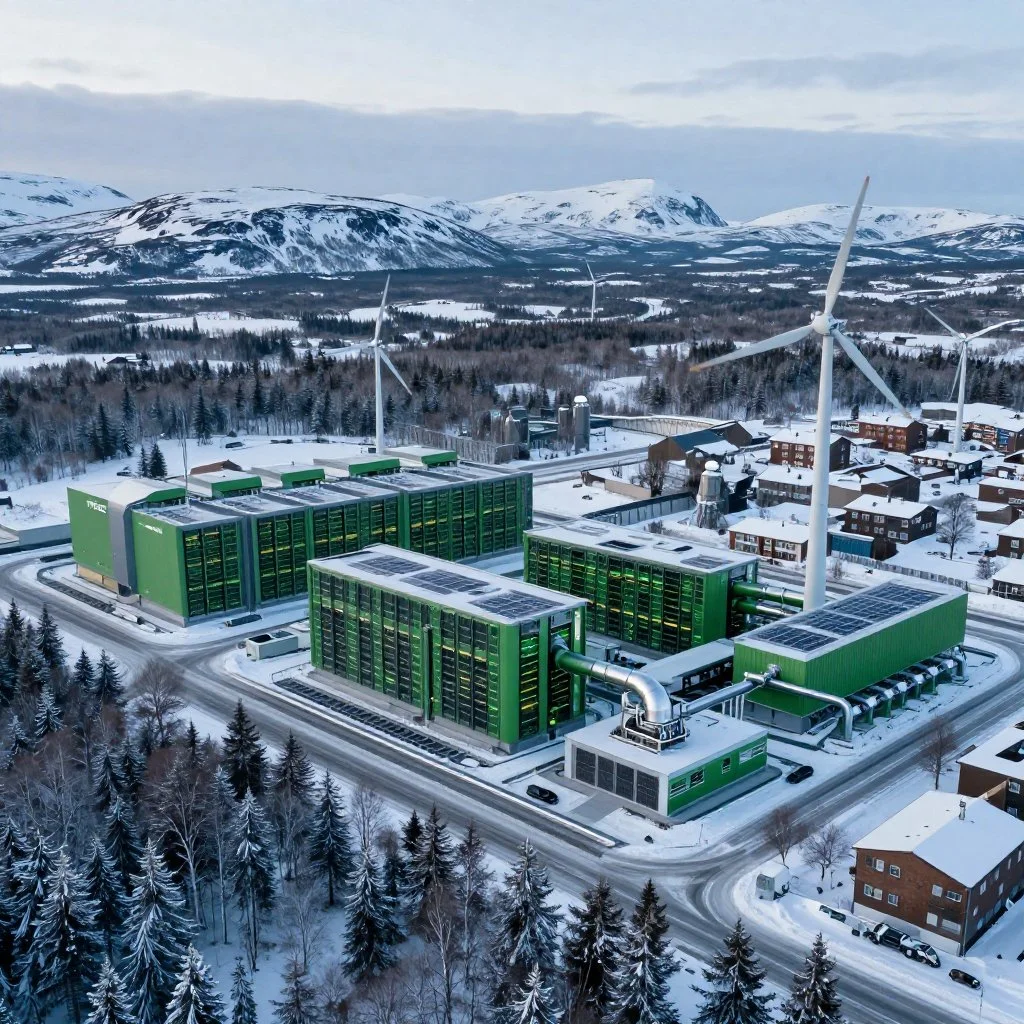
In a world driven by digital innovation, data centers have become the beating heart of modern infrastructure. Every message sent, every transaction processed, and every AI model trained depends on them. However, as their importance grows, so does their energy footprint. Traditional data centers are notorious consumers of electricity, and with global focus turning toward sustainability, the industry is under pressure to rethink how these facilities are powered and operated. A green data center isn’t just a buzzword; it represents a necessary shift toward a more responsible, energy-efficient future.
The Nordic region; encompassing Sweden, Norway, Denmark, Finland, and Iceland, has emerged as a global leader in this transition. Thanks to a unique combination of abundant renewable energy, cool climate conditions, and forward-thinking infrastructure planning, the Nordics are quietly setting the standard for sustainable data center growth. In this article, we’ll explore what makes green data centers essential, why the Nordic region is particularly suited to host them, and how organizations can seize this opportunity with expert support from Tytec AB.
What Makes a Data Center ‘Green’?
At its core, a design for a green data center aims to reduce environmental impact without compromising performance or reliability. Unlike traditional facilities that rely heavily on fossil-fuel-driven electricity and energy-intensive cooling systems, a green data center embraces modern technologies and practices that minimize energy consumption and carbon emissions. This includes sourcing power from renewable energy, using energy-efficient IT and cooling systems, and actively monitoring performance to continuously improve efficiency.
What distinguishes a truly green facility is its holistic approach: it doesn’t just optimize one aspect of the operation, but integrates sustainability into every layer, from power procurement to heat management and beyond. This shift isn’t only about environmental stewardship; it also makes economic sense. Sustainable operations often come with lower long-term costs, stronger regulatory alignment, and a more resilient brand reputation in a world increasingly driven by ESG commitments.
Why the Nordics Are Ideal for Sustainable Data Centers
The Nordic advantage doesn’t come from a single source; it’s the result of several powerful conditions aligning.
To begin, the Nordic countries boast a high proportion of clean, renewable electricity. Hydropower dominates Norway’s grid, which produces nearly all its electricity from renewable sources, and Iceland’s power system is almost entirely wind, hydro, and geothermal. Sweden and Finland also draw heavily from renewable sources, like hydropower, wind energy, and nuclear, creating a stable, low-carbon foundation for energy-intensive operations. This availability of green power makes it possible for data centers in the region to significantly reduce their carbon footprint.
Another environmental asset the Nordics enjoy is their cool, stable climate. Temperature plays a significant role in data center operations because cooling systems can consume substantial amounts of power. In the Nordic context, the naturally chilly conditions mean that facilities can often use outdoor air or water for cooling instead of relying solely on energy-consuming mechanical systems. This reduces both operational costs and energy usage, making cooling far more efficient and environmentally friendly.
However, the benefits go beyond climate and energy supply. Nordic countries also enjoy political stability and robust infrastructure, providing reliable conditions for long-term investment. High-speed connectivity, proximity to major European markets, and government policies that encourage sustainability and efficiency all contribute to making the region an attractive destination for green data center development.
New Approaches to Waste Heat and Community Integration
One of the most exciting developments in Nordic green data centers is how they view waste heat, not as something to be discarded, but as a resource. Traditional data centers produce significant amounts of heat as a byproduct of server operations. Nordic innovators are increasingly capturing this waste heat and redirecting it into district heating systems that warm homes, schools, and businesses in nearby communities. For example, data centers in Finland and Sweden are already part of local energy ecosystems, feeding excess heat into networks that reduce reliance on fossil-fuel-based heating.
This integration directly benefits communities by lowering heating costs and reducing emissions, turning a once overlooked byproduct into a tangible societal benefit. In some cities, district heating supplied by data center waste heat contributes to significant portions of residential heating demand, illustrating how digital infrastructure can serve both industry and public needs simultaneously.
By embracing these circular approaches, Nordic data centers are transforming from energy consumers into active participants in local energy systems, a model that aligns perfectly with broader ambitions around circular economies and sustainable growth.
Trends and Market Confidence in Nordic Sustainable Growth
The shift toward green data centers in the Nordics isn’t just theoretical; market momentum and investment trends back it. Analysts observe that the level of coordination between energy planning, policy, and infrastructure deployment in the region has allowed Nordic markets to scale capacity more steadily and predictably than many other European hubs. This has attracted both colocation developers and hyperscale players who are seeking long-term, low-carbon operations.
Growth projections show that Nordic data center markets continue to expand, with Sweden often leading in market share, while analysts expect Finland to grow rapidly in the years ahead. Government tax incentives, streamlined permitting processes, and strong renewable power grids help close the total cost of ownership gap compared to traditional FLAP-D (Frankfurt, London, Amsterdam, Paris, Dublin) data center clusters. This makes Nordic locations very attractive for new builds and expansions.
At the same time, regulatory landscapes are evolving. New EU-level directives and reporting requirements around energy usage, carbon factors, and reuse efforts are shaping how data centers measure and report sustainability. The Nordic industry has already shown strong alignment with these goals, readying itself for the next phase of compliance and competitive advantage.
Overcoming Challenges on the Path to True Sustainability
Even with so many advantages, building sustainable data centers isn’t without challenges. Renewable energy, while abundant in the Nordics, still requires careful integration and long-term planning to ensure consistent availability. Grid updates and transmission capacity must keep pace with growing consumption, something national energy strategies need to address in lockstep with data center development.
At the same time, advanced cooling technologies, heat reuse systems, and AI-driven energy management require expertise and investment. While these tools deliver operational gains and reduced emissions, they necessitate careful design and implementation. Organizations that approach sustainability as a long-term strategic goal rather than a short-term checklist will find the greatest success.
How Tytec AB Supports Sustainable Data Center Development
At Tytec AB, we understand that building a green data center is more than a construction project; it’s a strategic transformation. Our expertise spans renewable energy integration, performance optimization, and infrastructure planning tailored to the unique conditions of the Nordic region. We work closely with clients to align sustainability goals with operational reality, ensuring that every project maximizes energy efficiency, regulatory compliance, and long-term resilience.
Whether it’s integrating advanced cooling systems, harnessing renewable power sources, or designing heat reuse strategies that benefit local communities, Tytec’s team can help you unlock the full potential of your data center investment.
Conclusion: A Blueprint for Sustainable Digital Infrastructure
The global data explosion shows no signs of slowing, and the need for scalable, sustainable infrastructure has never been clearer. The Nordic region, with its renewable energy abundance, climate advantages, and strong policy alignment, offers a compelling blueprint for designing and deploying green data centers effectively. By embracing sustainability not just as a goal but as a foundational principle, organizations can create digital infrastructure that delivers performance and purpose.
If you’re ready to build for the future; one that’s efficient, responsible, and powerful, Tytec AB is here to guide you every step of the way.