

Expanding into Sweden? The Complete Data Center Infrastructure Checklist
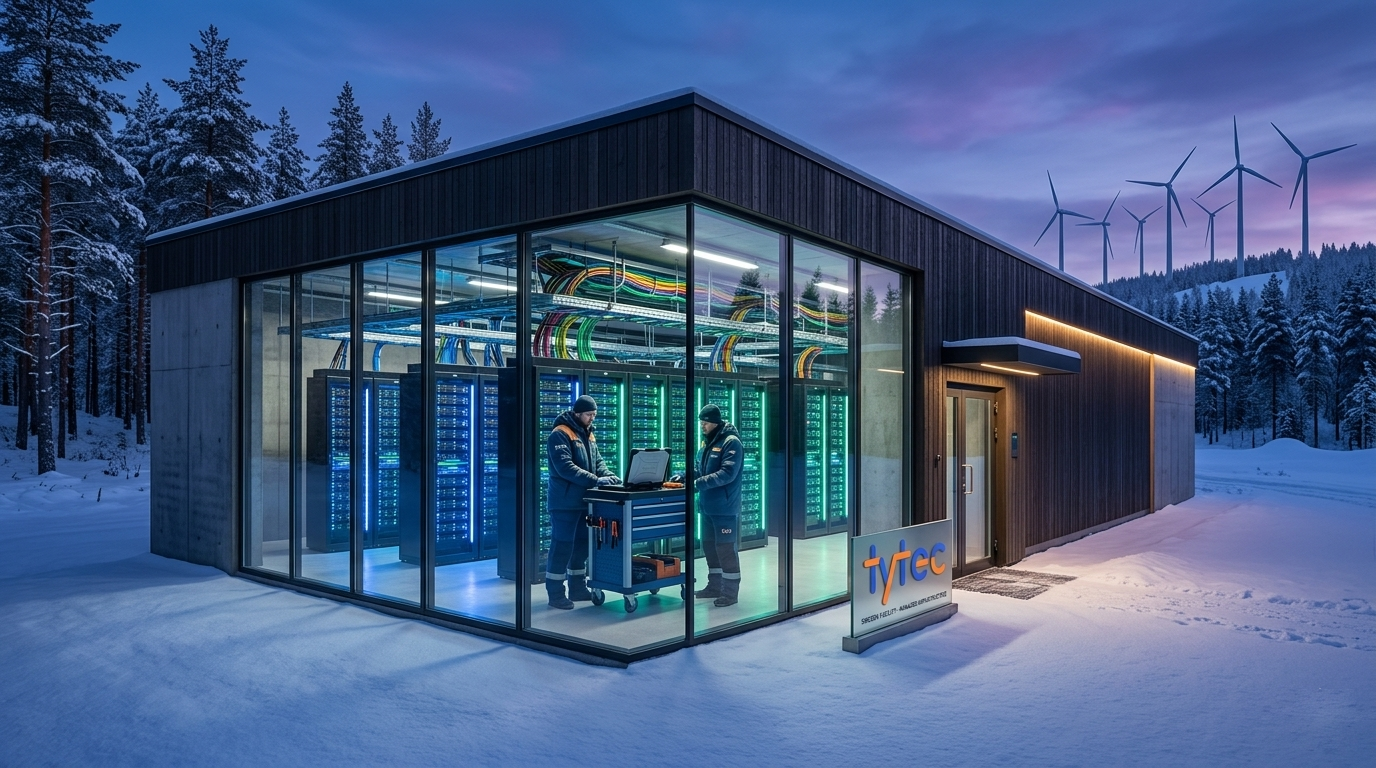
Why Sweden Is Becoming Europe’s Infrastructure Gateway
Sweden has rapidly emerged as one of the most attractive locations for data center expansion in Europe. For international operators, it offers a unique combination of renewable energy, political stability, and a climate that supports highly efficient cooling. These advantages have positioned Sweden as a core hub within the growing ecosystem of Nordic data centers.
However, while the macro environment is compelling, the operational reality is more complex. Expanding into Sweden isn’t only about securing rack space or establishing connectivity. It requires a structured approach to data center infrastructure in Sweden, where physical execution, local expertise, and operational resilience all play a critical role.
Because no matter how advanced your systems are, infrastructure remains physical, and that is where ultimately defined performance.
The Reality Most Operators Discover Too Late
For many organizations, the initial deployment phase appears smooth. Equipment is installed, systems come online, and monitoring tools report normal operation. From a remote operations center, everything seems under control.
Then something small fails.
A cable is mispatched. A transceiver stops working. A server becomes unresponsive. At that moment, a key limitation becomes clear: remote systems can detect problems instantly, but they can’t resolve them.
This is a common challenge in data center operations in Sweden and across the Nordics. Without local support, even minor incidents can take hours to resolve, introducing unnecessary downtime and operational risk. This gap between visibility and execution is what many operators experience as the physical infrastructure gap.
Closing that gap is essential for maintaining uptime and ensuring that infrastructure performs as expected.
Building Infrastructure That Works in Sweden
Successful data center expansion in Sweden depends on more than deployment. It requires an infrastructure model that integrates physical support, network reliability, compliance, and scalability into a single operational framework.
The following areas form the foundation of a reliable and high-performing deployment.
Local On-Site Support Isn’t Optional
One of the most critical components of any expansion strategy is access to on-site support in Sweden. While remote management tools provide visibility, they can’t replace physical intervention.
Tasks such as hardware installation, cable verification, equipment replacement, and troubleshooting all require a physical presence. Without it, even simple issues can escalate into extended downtime.
This is why remote hands in Sweden are a core part of modern infrastructure operations. They act as an extension of your internal team, providing immediate execution and ensuring that problems disappear without delay.
In practice, this reduces response times, improves reliability, and allows international operators to manage Swedish infrastructure with confidence.
The Physical Layer Still Determines Performance
Despite advances in automation and cloud technology, the performance of any data center still hinges on its physical components.
Cabling, power distribution, and airflow all play a direct role in system stability. A poorly seated fiber connection or a contaminated connector can introduce latency, packet loss, or intermittent failures that are difficult to diagnose remotely.
This is particularly important in high-performance environments where bandwidth demands are increasing. As infrastructure evolves, network integrity and fiber validation become critical to maintaining consistent performance.
Regular testing, structured cabling, and physical inspections aren’t optional; they’re essential for ensuring long-term reliability.
Site Surveys Eliminate Assumptions
A common mistake in international deployments is relying on assumptions about facility conditions. People often take power availability, cooling performance, and physical layouts at face value, but in practice, these factors vary significantly.
A professional site survey provides verified data on:
Power capacity and redundancy
Cooling efficiency and airflow
Rack layout and space utilization
Connectivity paths and cable routing
This approach ensures that infrastructure is deployed based on current conditions, not expectations. It also reduces the risk of delays, unexpected costs, and performance issues later in the deployment process.
The physical environment incorporates compliance.
Operating a data center in Sweden means aligning with strict regulatory frameworks, including GDPR and ISO standards. These requirements extend beyond software and data handling into the physical infrastructure itself.
Access control, documentation of on-site work, and traceability of changes are all part of compliance. This means that every physical action, whether it’s replacing hardware or adjusting cabling, must be controlled and recorded.
For international operators, integrating compliance into the infrastructure from the beginning is essential. It simplifies operations, reduces risk, and ensures alignment with both Swedish and EU standards.
Logistics Define How Fast You Can Scale
Scaling infrastructure in Sweden depends to a great extent on logistics. Hardware must be shipped, cleared through customs, transported securely, and deployed efficiently within the data center.
Without proper coordination, delays can occur at every stage. Equipment may arrive without access approval, installations can be postponed, and deployment timelines can slip.
A well-managed logistics strategy ensures that infrastructure moves from delivery to deployment without friction. This allows organizations to scale quickly and respond to demand without operational bottlenecks.
We measure availability in minutes, not hours.
In modern data center environments, uptime isn’t just a goal, it’s an expectation. We must resolve incidents immediately, regardless of when they occur.
The need for round-the-clock data center assistance in Sweden is essential. A delay of even one hour can have significant financial and operational consequences.
By ensuring continuous availability of on-site engineers and support services, organizations can minimize downtime and maintain consistent performance across their infrastructure.
Sweden Is Part of a Larger Architecture
Most deployments in Sweden are part of a broader infrastructure strategy that includes multiple regions, cloud environments, and edge locations.
This makes integration just as important as deployment. Connectivity between sites must be reliable, latency must be predictable, and configurations must remain consistent.
As hybrid infrastructure in the Nordics continues to grow, Sweden plays a key role in supporting distributed systems that require both performance and resilience.
Where Most Expansions Go Wrong
Even experienced organizations encounter challenges when expanding into Sweden. These challenges rarely stem from a single issue, but, rather, from a combination of structural oversights.
Relying entirely on remote management introduces delays in execution. Underestimating the importance of the physical layer leads to instability. Delaying local partnerships creates operational gaps that are difficult to resolve later.
Another common issue is treating compliance as an afterthought, rather than integrating it into the infrastructure from the beginning. This can result in additional costs and operational complexity.
Avoiding these mistakes requires a proactive approach that prioritizes physical execution, local expertise, and operational alignment.
Why Sweden Rewards the Right Approach
When infrastructure is implemented correctly, Sweden offers significant long-term advantages. Energy efficiency reduces operating costs, while the climate supports sustainable cooling. The country’s stability and advanced infrastructure ecosystem provide a reliable foundation for growth.
These benefits make Sweden an ideal location for organizations looking to expand into the European market. However, they only materialize when effective management of infrastructure.
When the physical and operational layers align, Sweden becomes more than just a deployment location; it becomes a strategic asset.
Turning Expansion Into a Strategic Advantage
Successful data center expansion in Sweden is ultimately about execution. It’s the ability to translate global strategy into local action without delays or compromises.
This is where having a local infrastructure partner makes a significant difference. By providing on-site expertise, immediate response, and deep knowledge of the Swedish data center environment, they ensure that infrastructure performs exactly as intended.
Instead of reacting to issues, organizations can operate proactively, maintaining stability and scaling with confidence.
Ready to Expand into Sweden?
Sweden offers one of the strongest opportunities in Europe for data center growth, but success depends on more than location; it depends on how infrastructure is implemented and managed.
If you’re planning a data center expansion into Sweden, the focus should be on closing the physical gap, ensuring local execution, and building infrastructure that delivers consistent performance.
TYTEC supports international operators with:
Remote hands and on-site engineering in Sweden
Data center infrastructure deployment and validation
24/7 support for critical environments
Scalable services across Nordic data centers
If you’re expanding into Sweden or optimizing your current infrastructure, now is the time to build a foundation that isn’t just functional, but reliable, scalable, and future ready.