
Artificial Intelligence Is Changing Network Infrastructure Requirements
Artificial intelligence has rapidly become one of the most significant drivers of infrastructure investment across Sweden and the Nordic region. Organizations are deploying GPU clusters, machine learning platforms, high-performance computing environments, and advanced analytics systems at an unprecedented rate. While much of the industry focus remains on processors, software, cloud services, and storage platforms, the reality is that every AI system depends upon a reliable physical network foundation. Data must move uninterrupted between servers, storage systems, applications, and users, often at speeds and volumes that would have been unimaginable only a few years ago. As AI workloads continue to grow in complexity and scale, the physical infrastructure supporting them has become more important. Structured cabling is no longer simply a background technology hidden behind walls and beneath raised floors. It has become a strategic asset that directly influences performance, reliability, scalability, and long-term operational success.
Why Structured Cabling Matters More Than Ever
For many years, people viewed structured cabling as a long-term utility that needed to work. Once installed, it was expected to quietly support business operations for decades. Artificial intelligence challenges that assumption. Modern AI environments generate extraordinary volumes of east-west traffic, as servers exchange information continuously during training, inference, and data processing activities. Infrastructure that designers intended for traditional enterprise applications may struggle to support these new demands. Network bottlenecks, poor cable management, inadequate documentation, and substandard installation practices can quickly become obstacles to performance. Because structured cabling often remains in service for far longer than the active equipment connected to it, the quality of installation today can influence network performance for decades. Investing in a professionally designed and installed structured cabling system is increasingly becoming a prerequisite for successful AI adoption
The Growing Role of Fiber Optic Infrastructure
Fiber optic infrastructure has become one of the most important components of modern network architecture. As organizations continue to embrace artificial intelligence, cloud services, edge computing, and high-density data center environments, the need for high-bandwidth, low-latency connectivity continues to increase. Fiber provides the scalability and performance required to support these evolving requirements while also providing a pathway for future growth. Across Sweden and the Nordics, organizations are deploying larger fiber backbones, upgrading interconnects, and investing in infrastructure capable of supporting the next generation of networking standards. Unlike active networking equipment that may be replaced every few years, a properly installed fiber infrastructure can remain a valuable business asset for decades, making installation quality and certification important.
Preparing for 400G and 800G Networking
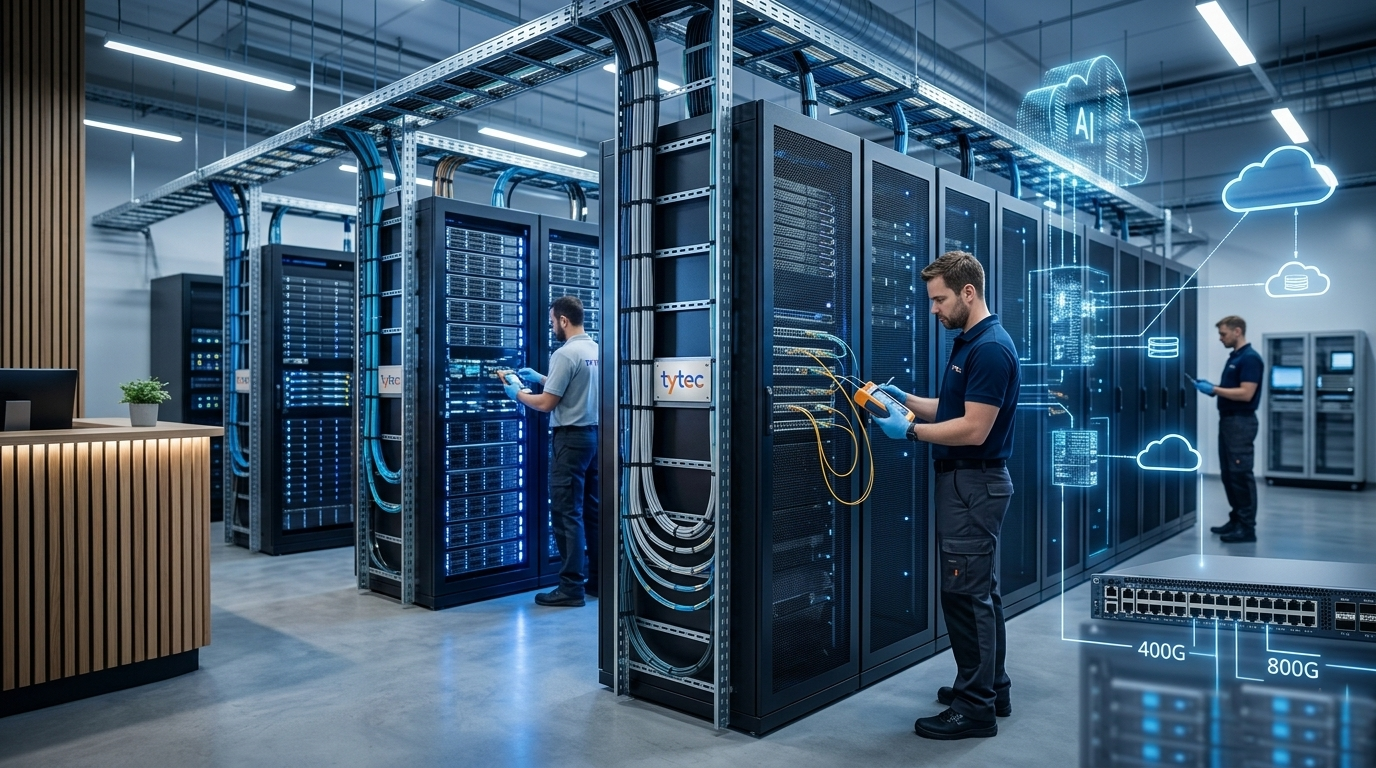
The transition toward higher-speed networking is accelerating throughout the data center industry. Many modern environments already rely on 100G and 400G connectivity, while 800G networking is rapidly becoming part of long-term infrastructure planning. As network speeds increase, tolerances become smaller and installation quality becomes more important. Minor imperfections that might have had little impact on lower-speed networks can create significant performance issues in high-bandwidth environments. Proper cable routing, termination, testing, certification, and documentation are no longer optional best practices. They’re fundamental requirements for ensuring infrastructure performs as intended. Organizations preparing for future AI deployments should be evaluating whether their physical network infrastructure is capable of supporting the bandwidth requirements that will define the next decade.
Why Certification Matters for Long-Term Reliability
As infrastructure becomes more critical to business operations, organizations are placing greater emphasis on quality assurance and risk reduction. This is one of the reasons manufacturer certification programs continue to grow in importance. Certification demonstrates that installers have completed installations to rigorous standards and best practices, while providing customers with greater confidence in the quality of the finished infrastructure. TYTEC recently achieved Siemon Certified Installer status, allowing us to design, install, test, certify, and register qualifying Siemon structured cabling systems backed by Siemon’s industry-leading 25-year system warranty. This provides customers with the assurance that their infrastructure investment has been installed according to recognized manufacturer standards and that comprehensive testing, documentation, and warranty protection support it.
Building Future-Ready Infrastructure Across Sweden and the Nordics
The demands placed upon digital infrastructure will continue to increase as organizations adopt artificial intelligence, automation, advanced analytics, cloud platforms, and next-generation networking technologies. While technology itself will continue evolving, the need for a reliable physical foundation will remain constant. Structured cabling, fiber optic infrastructure, and professionally installed network systems form the backbone of every successful digital transformation initiative. Whether supporting enterprise networks, AI infrastructure projects, data center expansions, or large-scale connectivity deployments, organizations that invest in quality physical infrastructure today will benefit in the future. Across Sweden and the Nordic region, TYTEC continues helping customers build these foundations through professional installation services, fiber optic expertise, infrastructure testing, and certified structured cabling solutions designed for long-term performance.
Frequently Asked Questions:
Why is structured cabling important for AI infrastructure?
Artificial intelligence systems generate large volumes of network traffic and require reliable, high-performance connectivity between servers, storage platforms, and applications. Structured cabling provides the physical foundation that supports this data movement and helps ensure consistent performance.
What is a Siemon Certified Installer?
A Siemon Certified Installer has authorization to install, test, certify, and register qualifying Siemon structured cabling systems according to manufacturer standards and industry best practices.
Does TYTEC provide fiber optic installation services?
Yes. TYTEC provides fiber optic installation, testing, certification, troubleshooting, and infrastructure support services throughout Sweden and the Nordic region.
Can TYTEC support data center projects?
Yes. TYTEC supports data centers with structured cabling, fiber optic infrastructure, network testing, remote hands services, equipment installation, and ongoing infrastructure support.
Can a structured cabling system support future technologies?
A properly designed structured cabling system intends to support multiple generations of technology, helping organizations accommodate future bandwidth requirements and network upgrades without requiring complete infrastructure replacement.